
He was an ugly man, short, squat, his head misshapen and sloped to one side, like he had run into a building, or had melted, or had a stroke. He was on the stage, and it really didn’t matter what he said. We weren’t there to listen to words but to be in his presence, because this old, frog-like North Carolina country lawyer had brought down a president. His drawl was familiar from the televised hearings, and his raspy way of swallowing and chewing on ideas as he spoke.
And he hadn’t flinched. He hadn’t slipped into platitudes or easy detours to avoid what had to be said, what had to be done. At a time when it seemed the lie would win out, when convenience and manipulation reigned supreme, his voice presented a thread through the labyrinth of lies and out to the other side. When it was over, the president was gone.
He had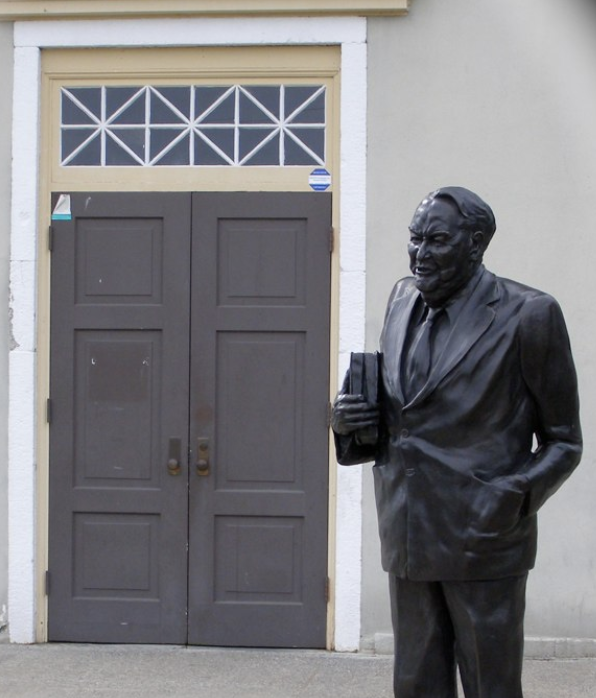 finished speaking, and through the standing ovation, I rushed to the edge of the stage, full of fear and responsibility, on my second reporting assignment for the college newspaper. He was barely finished waving and stepping aside, when the entire audience saw a young man run onto the stage with a notebook and surprise the senator from North Carolina with questions fired so quickly that the answers weren’t even remembered.
“Let’s step aside,’ he said, gesturing to the wings of the stage. We moved over into the tall levers and folds of the curtain, and I may, or may not, have had an “interview,” a formal exchange in a question and answer in a format designed by some formula I had absorbed from reading cheap paperbacks on “How to Be a Reporter,” and “The Craft of Interviewing” that said everything except how to let the truth unfold between you and someone else.
One way or another, we moved slowly to the doorway to leave the stage area, and we emerged on a parapet at the top of a short flight of stairs. Below us was a crowd, men in business suits pressed together, with hungry anxious eyes, all raising their hands and straining forward to shake his hand. He leaned down over the railing and reached forward one by one, murmuring a word of thanks, humbled by the desire in those eyes and hands, each one searching for the feel, the touch, the connection with the force we call truth, as if through the shake of a hand, that which Sam Ervin had done could run into their bodies and erase their sins, their blindness, their votes for Nixon, their own small contribution to the confusion and darkness that was, for a time, claiming the country.
<♦>